


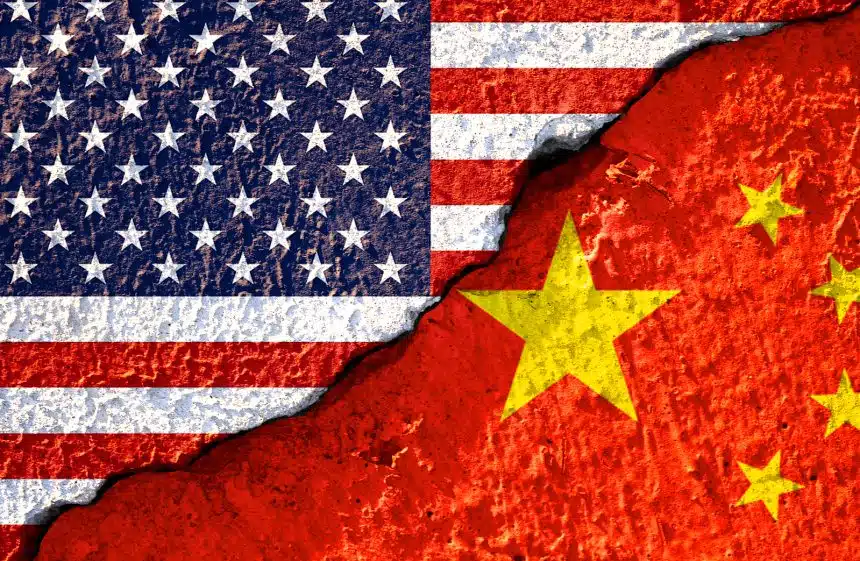
President Donald Trump and Chinese President Xi Jinping met in Beijing for a historic summit focused on improving relations between the world’s two largest powers. The high-level discussions centered on trade, global stability, economic cooperation, artificial intelligence, and the reduction of geopolitical tensions. Analysts worldwide are closely watching the summit for signs of a long-term shift toward a more stable and cooperative global order.
BEIJING, China – May 14, 2026 (STL.News) President Donald Trump and Chinese President Xi Jinping met Thursday in what many political analysts and global investors are already calling one of the most important diplomatic meetings in recent history. The summit between the leaders of the world’s two most powerful economies takes place amid growing geopolitical tension, economic uncertainty, and military instability across several regions.
The highly watched meeting in Beijing focused on improving communication and rebuilding a more stable relationship between the United States and China after years of escalating trade disputes, technology restrictions, military concerns, and rising political hostility between the two nations.
The images broadcast worldwide showed Trump and Xi shaking hands before beginning extensive discussions at the Great Hall of the People. The meeting carried enormous symbolic significance because relations between the United States and China affect nearly every major aspect of the global economy, including manufacturing, shipping, energy prices, technology development, agriculture, and financial markets.
For years, the relationship between Washington and Beijing has been defined largely by confrontation. Tariffs, supply chain disruptions, semiconductor restrictions, military tensions over Taiwan, and economic nationalism have pushed the two nations closer to a dangerous geopolitical rivalry. The summit in Beijing, however, projected a dramatically different tone.
Instead of public confrontation, both leaders emphasized communication, stability, and the possibility of long-term cooperation.
According to early updates from the summit, both sides discussed ways to reduce economic uncertainty, improve trade relations, and restore confidence in global markets. Officials familiar with the discussions indicated that both governments acknowledged the dangers of continued escalation between the two superpowers.
The meeting comes at a critical moment for the world.
Global markets remain under pressure from international conflicts, energy instability, inflation concerns, and slowing economic growth in several major regions. Investors and world leaders understand that worsening relations between the United States and China could further damage the world economy.
At the same time, improved cooperation between the two nations could stabilize markets and create opportunities for stronger economic growth worldwide.
Many business leaders and economists believe the summit could mark the beginning of a more pragmatic relationship between the two countries. Even limited progress in reducing tensions could yield major economic benefits for businesses and consumers worldwide.
American manufacturers, technology companies, agricultural exporters, transportation firms, and financial institutions all maintain enormous economic interests connected to China. Likewise, China depends heavily on stable international trade and continued economic access to global markets.
That shared economic dependence may become one of the strongest motivations for future cooperation.
One of the most important subjects reportedly discussed during the summit involved global stability and military tensions. Relations between the United States and China have become increasingly strained in recent years due to disagreements involving Taiwan, military activity in the South China Sea, cybersecurity concerns, and growing competition for technological dominance.
The fact that both leaders chose diplomacy and direct communication instead of aggressive public rhetoric has already eased concerns among some international observers.
Markets around the world reacted positively to early reports that the discussions were constructive and focused on long-term stability.
The summit also reportedly included discussions involving artificial intelligence, semiconductor technology, energy security, and future economic cooperation.
Artificial intelligence has rapidly become one of the most important strategic issues facing global governments. Both the United States and China recognize that AI technology will shape future economies, national security systems, healthcare, communications, manufacturing, and financial markets.
Without cooperation and communication between major powers, many experts fear AI competition could create dangerous geopolitical instability.
The summit in Beijing may represent an effort to establish at least some level of strategic communication regarding emerging technologies before competition escalates further.
Energy markets were also closely watching the meeting.
Ongoing instability in the Middle East and concerns involving the Strait of Hormuz have placed enormous pressure on global oil markets. Rising fuel costs have affected transportation companies, restaurants, manufacturers, airlines, and consumers worldwide.
Both the United States and China have strong economic incentives to avoid major disruptions to global energy supplies.
The summit reportedly included conversations surrounding broader global security concerns and the importance of maintaining economic stability during periods of international conflict.
For many observers, the symbolism of the meeting itself may prove just as important as the policy discussions.
Historic diplomatic moments often begin with simple images that later define entire eras.
The handshake between Trump and Xi immediately drew comparisons to several major moments in modern geopolitical history, including President Richard Nixon’s historic opening to China in the 1970s and Cold War-era meetings between American and Soviet leaders that helped reduce global tensions.
While major disagreements still remain between Washington and Beijing, the tone of the summit suggested both governments understand how dangerous continued escalation could become.
Military conflict between the United States and China would have catastrophic consequences for the global economy and international stability.
That reality creates strong incentives for diplomacy.
Many analysts believe both leaders recognize that future global prosperity depends heavily on avoiding direct confrontation between the world’s largest powers.
The summit also highlighted the changing structure of global leadership.
For decades, the world has operated under increasing economic globalization, with supply chains and financial systems connecting countries more closely than ever before. Today, nearly every major international issue — from artificial intelligence and cybersecurity to manufacturing and energy — involves both the United States and China.
As a result, the relationship between the two nations now influences the future direction of the entire world.
That is why this meeting matters far beyond Beijing or Washington.
The outcome of future negotiations between Trump and Xi could affect:
- global inflation,
- stock markets,
- energy prices,
- international trade,
- military stability,
- technology development,
- manufacturing,
- and consumer confidence worldwide.
Business leaders across the globe are expected to closely monitor whether the summit leads to additional negotiations, trade agreements, or future diplomatic meetings.
There is also growing speculation that both governments may seek broader economic cooperation in strategic industries while reducing the risk of future trade wars.
At the same time, major challenges remain.
Taiwan remains one of the most sensitive geopolitical issues in the world. Technology restrictions and economic competition remain serious areas of disagreement between the two governments.
Neither side is expected to completely abandon its strategic priorities.
Still, many observers believe the summit demonstrated that diplomacy remains possible even during periods of intense global tension.
That alone represents a meaningful development.
In recent years, many world leaders and analysts feared relations between the United States and China were moving steadily toward permanent confrontation.
The summit in Beijing may not resolve every disagreement, but it could help create a more stable framework for communication between the two governments.
If future negotiations continue, the meeting could eventually be remembered as a turning point that helped reduce global instability during one of the most uncertain geopolitical periods in modern history.
For ordinary Americans, improved relations between the United States and China could eventually mean lower economic uncertainty, stronger markets, reduced inflationary pressure, and greater stability across global supply chains.
For the rest of the world, it could mean something even larger.
It could represent a shift away from the dangerous idea that global superpowers are destined for permanent conflict.
The world now waits to see whether the Beijing summit becomes a temporary diplomatic moment or the beginning of a larger transformation in international relations.
Either way, the image of Trump and Xi Jinping shaking hands in Beijing amid global uncertainty is likely to become one of the defining political moments of 2026.
More General News articles published on STL.News:
© 2026 St. Louis Media, LLC d.b.a. STL.News. All rights reserved. No content may be copied, republished, distributed, or used in any form without prior written permission. Unauthorized use may result in legal action. Some content may be created with AI assistance and is reviewed by our editorial team. For official updates, visit STL.News.